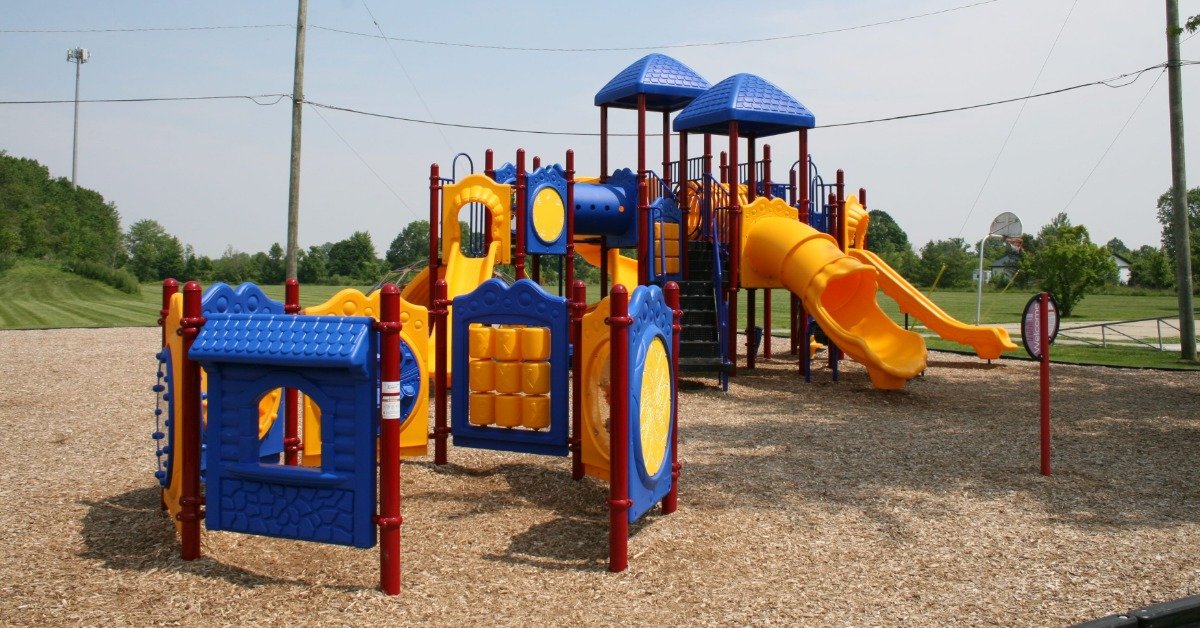
A memorable playground gives children more than equipment to use. It gives them a setting where ordinary movement can become part of a story they control. Strong design supports that freedom without telling children exactly what to imagine or how to play. Thoughtful planning reveals how to design a playground that inspires imagination.
Begin With a Story-Friendly Layout
Children create richer games when the playground encourages them to move with purpose. A connected route can lead from a low platform toward a taller destination, giving each trip a sense of progress. The layout should suggest a journey while leaving enough freedom for children to change its meaning. One group may cross a bridge to reach a hideout, while another may treat the same route as a mountain trail.
Leave Room for Children To Define the Story
The right designer can spark pretend play without assigning one fixed theme to the entire playground. Details such as steering wheels or lookout panels offer useful play prompts, yet they do not limit the story to one role. Children can reinterpret an open structure each time they visit.
Moreover, overly specific decoration can narrow the range of games children invent. A structure shaped like one recognizable object may initially excite children, but the same identity can control every future story. Broader visual cues give children more authority over the setting.
Create Movement With a Clear Purpose
Imaginative play becomes more engaging when physical movement advances the story. A climbing wall can serve as the difficult route into a fort, while a slide can provide the quick escape. Each feature should connect to the next action rather than sit alone as a separate attraction. Children then build longer games because the equipment helps the story continue.
Height changes can make each route seem more purposeful by giving children a clear destination to reach. Low spaces invite younger children to enter with confidence, while higher platforms give older children a goal that requires more effort. Designers should keep transitions understandable and match each challenge to the intended age group. A well-paced route supports adventure without creating unnecessary confusion.
Choose Open-Ended Play Features
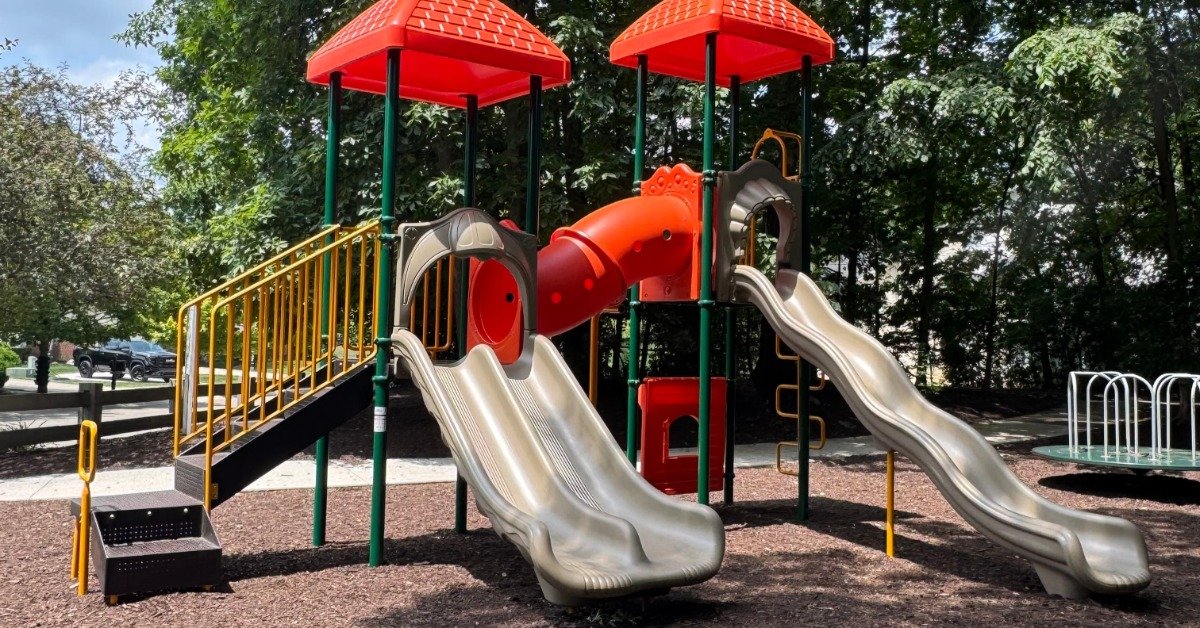
Another tip for designing a playground that inspires imagination is to choose features that can serve multiple purposes. A counter panel can support a store game, but it can also become a ticket booth or a research table. Movable play pieces offer similar flexibility when the setting allows supervised use. Each feature earns its place by supporting more than one kind of idea.
Natural forms can also invite interpretation. A low stump-shaped seat may become a meeting place during one game and a stepping stone during another. Abstract shapes often work better than detailed replicas because children can rename them. The design provides structure, while the children supply the meaning.
Build Several Kinds of Play Into One Space
Children do not approach imagination in the same way. Some prefer active stories that keep them moving, while others develop ideas through quieter role play. The playground should support both approaches without separating children into disconnected areas. A thoughtful plan lets different play styles meet within one shared setting.
Before choosing equipment, planners should define what each part of the playground contributes. The answers should guide the layout rather than follow a catalog page. A balanced plan may include the following roles:
- A central structure that anchors group stories
- A quieter space that supports focused play
- A movement route that gives adventures momentum
- An open area where children can invent new games
Each role should connect to at least one neighboring area. A quiet nook near a central platform lets a child stay involved without joining the busiest action. An open area beside a movement route gives group games room to grow. Connected zones make the playground work as one imaginative environment.
Protect Sightlines Without Removing Discovery
Adults need clear views across a playground, especially in shared community spaces. Children still benefit from partial enclosure because small boundaries can make a space seem private or special. Designers can meet both needs with open panels and low walls that suggest a hideaway without blocking supervision. The result supports discovery while keeping the layout easy to monitor.
Plan for Different Ages and Abilities
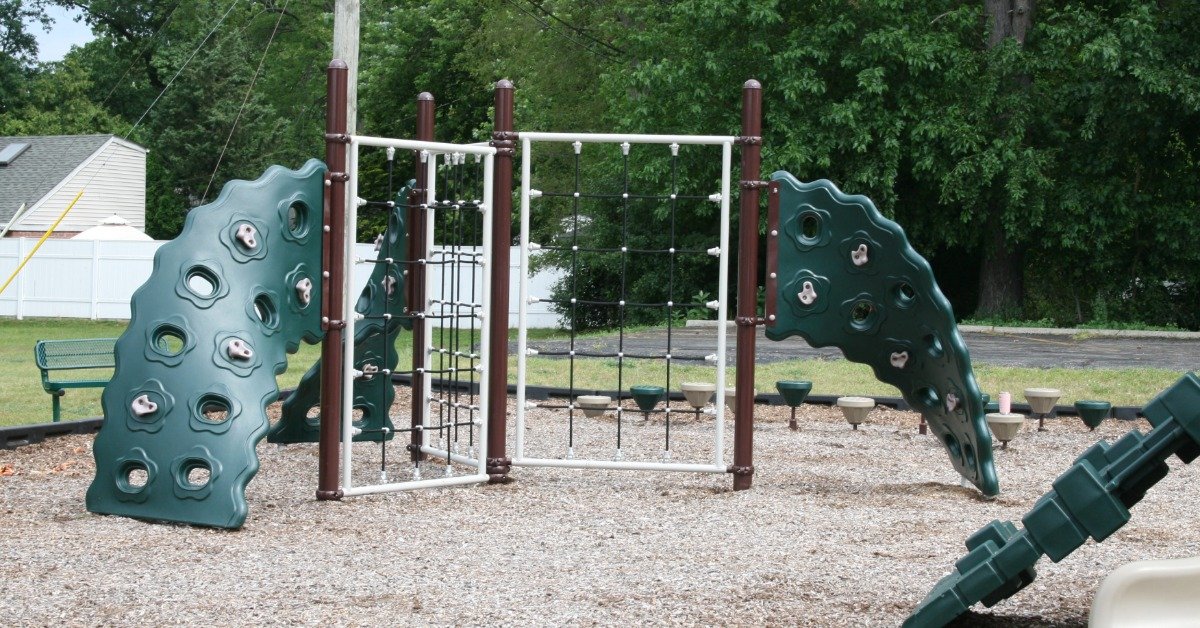
An imaginative playground should give more children a meaningful role in the same game. Accessible routes need to lead toward engaging destinations rather than stop at the edge of the action. Ground-level features can connect to elevated play through shared panels or nearby gathering spaces. Children can then participate in one story through different forms of movement.
Age range also shapes how children use imaginative prompts. Younger children often respond to clear details they can recognize quickly, while older children may prefer challenges that leave more room for interpretation. Designers should place simpler prompts near easier routes and broader cues near advanced features. The playground can then support growth without dividing the space into unrelated sections.
Let the Setting Add to the Adventure
The surrounding landscape should support the playground’s identity. Trees can frame the space and create changing patterns of light, while a gentle slope can make the route more interesting. Designers should work with useful site features instead of flattening every part into one uniform surface. The playground gains character when the setting becomes part of the experience.
Planting also helps define the edge of play without relying on hard barriers. Low landscaping can guide families toward an entrance and separate busy routes from resting areas. Planners should preserve clear visibility and select plants that suit active public spaces. A well-shaped edge makes the playground seem intentional before children even reach the equipment.
Choose Materials That Support Long-Term Use
A playground supports imaginative play best when children can rely on every feature to work as intended. Durable materials help platforms and play panels remain useful despite frequent activity. Regular maintenance also prevents worn parts from limiting how children move through the space. Professional installation gives the entire design a strong foundation for years of creative play.
Plan for New Stories Over Time
Children return to playgrounds that continue to offer new possibilities. Designers can encourage repeat use by combining dependable routes with details that support different interpretations. The structure does not need constant additions when its core features already allow children to change the game. Strong open-ended design keeps the space relevant as interests develop.
Create a Space Children Make Their Own
The strongest playgrounds provide enough structure to guide play while still giving children room to invent their own games. Kids Gotta Play helps families and community planners choose equipment that supports active use while giving imaginative play room to grow. Browse the available backyard playsets or speak with the team about a playground plan that fits your space. A well-designed setting can become the place where children return to invent their next adventure.