Nothing ruins a perfect day of backyard play like discovering that your outdoor trampoline now has a coating of bird droppings, twigs, and soggy leaves!
Bird droppings can create unsanitary conditions and potentially spread illness, while accumulated debris can damage your trampoline’s surface and create slippery, dangerous conditions. Keeping these birds and leaves away from your trampoline requires consistent effort and the right strategies, but the payoff is worth it.
Whether you have a traditional spring-based model or a modern springless trampoline, protecting your investment starts with understanding what attracts these unwanted visitors. Once you know, you can implement effective prevention methods that keep your backyard safe for play.
Why Your Trampoline Attracts Birds and Debris
Birds view your trampoline as prime real estate! The elevated, flat surface provides an ideal perch for surveying their territory and resting between flights. Some birds might also see the structure as the perfect nesting spot, believe it or not! The smooth jumping mat offers a comfortable landing pad, while the frame provides convenient perching opportunities.
Meanwhile, leaves can accumulate on trampolines due to wind patterns and your yard’s layout. Trees surrounding your play equipment naturally shed leaves, especially during autumn months, meaning some will end up on the trampoline. Even distant trees can contribute debris when wind carries the fallen leaves across your property. The trampoline’s design creates a natural collection point where leaves settle.
Proven Methods To Deter Birds
While leaves are bound to reach your trampoline some way or another and therefore require passive solutions, the presence of birds is something you can actively deter.
Visual Deterrents That Work
Shiny, reflective objects create movement and light patterns that make birds uncomfortable. You can discourage birds from seeing your play equipment as a go-to hangout by dangling old CDs, aluminum pie plates, or specialized bird tape around your trampoline’s perimeter. These items catch sunlight and create flashing effects that discourage birds from landing.
Predator decoys can also be highly effective when you use them correctly. If you position realistic owl or hawk decoys near your trampoline, remember to move them regularly—birds quickly learn when threats aren’t real! Rotating between different decoy types and locations maintains their effectiveness.
Sound-Based Solutions
Wind chimes provide gentle, consistent noise that we appreciate more than birds do. Choose metal chimes for clearer tones that travel further. Position multiple sets around your backyard play area for maximum coverage.
Physical Barriers
Trampoline covers represent your most effective defense against the most relevant concern: bird droppings. High-quality covers completely protect your jumping surface. Choose weather-resistant materials with proper drainage systems to prevent water accumulation.
If you want to keep birds away completely, you can install lightweight mesh above and around your trampoline’s frame. However, if you use netting like this, you have to regularly check the netting’s tension to prevent sagging or entanglement risks.
Effective Leaf Management Strategies
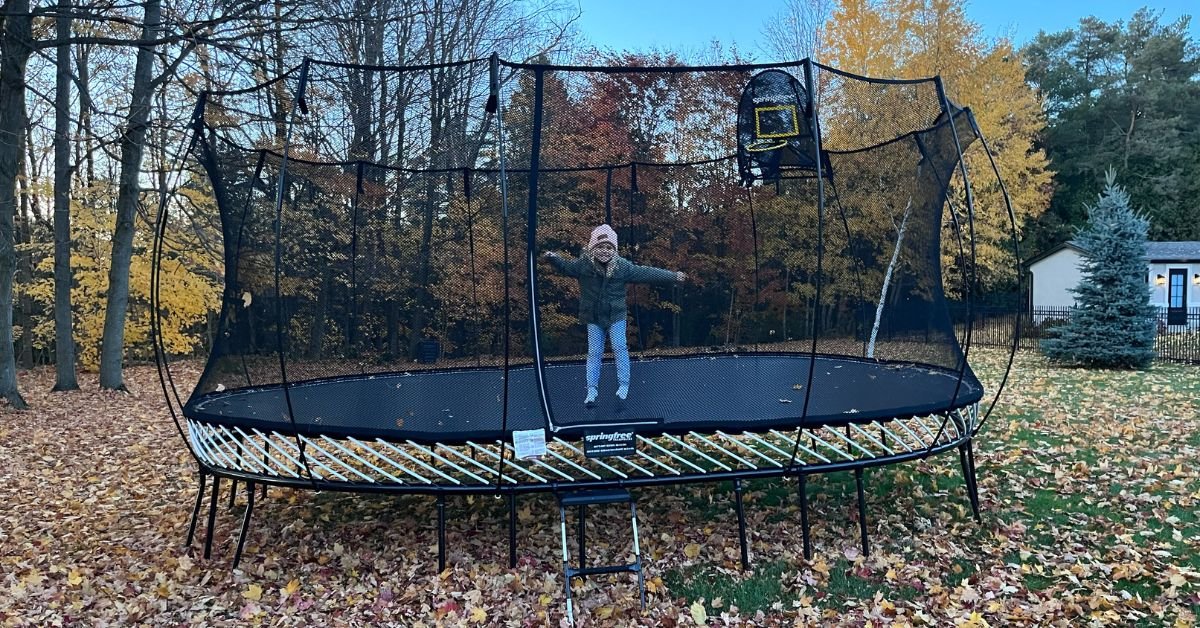
Keep the falling foliage away from your family’s trampoline with these quick tips.
Use Essential Cleaning Tools
Leaf blowers provide the fastest, most efficient removal method for dry debris. Electric models work perfectly for residential use, while battery-powered units offer portability without cord limitations. Always blow leaves away from your home and neighboring properties.
Soft-bristled brushes handle stubborn debris that blowers can’t remove. Choose brushes with extended handles to clean your entire jumping surface—that way, you don’t have to climb onto the trampoline every time. Avoid stiff brushes that might damage the mat material.
Establish a Maintenance Routine
Weekly cleaning during peak leaf-dropping seasons prevents accumulation problems. Quick five-minute sessions remove fresh debris before it embeds in or stains the surface. Daily visual inspections help you identify problem areas early; when possible, check the trampoline before playtime starts.
You can also perform seasonal deep cleanings to address stubborn stains and embedded debris. Mix mild soap with water for gentle cleaning solutions that won’t damage your trampoline’s materials. Rinse thoroughly and let the surface dry before use.
Long-Term Protection Strategies
Smart Landscaping Choices
Strategic tree trimming reduces leaf drop directly onto your play equipment and keeps birds from lingering just above your trampoline. Focus on overhanging branches within a 15-foot radius of your trampoline’s area. Professional arborists can advise on safe pruning practices that maintain tree health while reducing debris.
Consider your trampoline’s placement when planning new landscaping projects. Position new deciduous trees downwind from your trampoline to minimize leaf accumulation. Fun fact: Evergreen trees can actually create natural windbreaks that redirect debris away from your jumping area!
Weather-Resistant Covers
Invest in premium trampoline covers designed for your specific model. Look for UV-resistant materials, reinforced seams, and secure fastening systems. Properly fitted covers prevent water pooling and wind damage while blocking debris completely.
All-weather covers allow year-round protection without seasonal removal. These heavy-duty options withstand harsh weather conditions while maintaining easy access for family fun.
Safety and Maintenance Excellence
Regular Inspection Protocols
Monthly safety checks ensure your trampoline remains in excellent condition. Examine the jumping mat for tears, check frame connections for loosening, and inspect any safety nets for damage. Address small issues immediately to prevent larger problems.
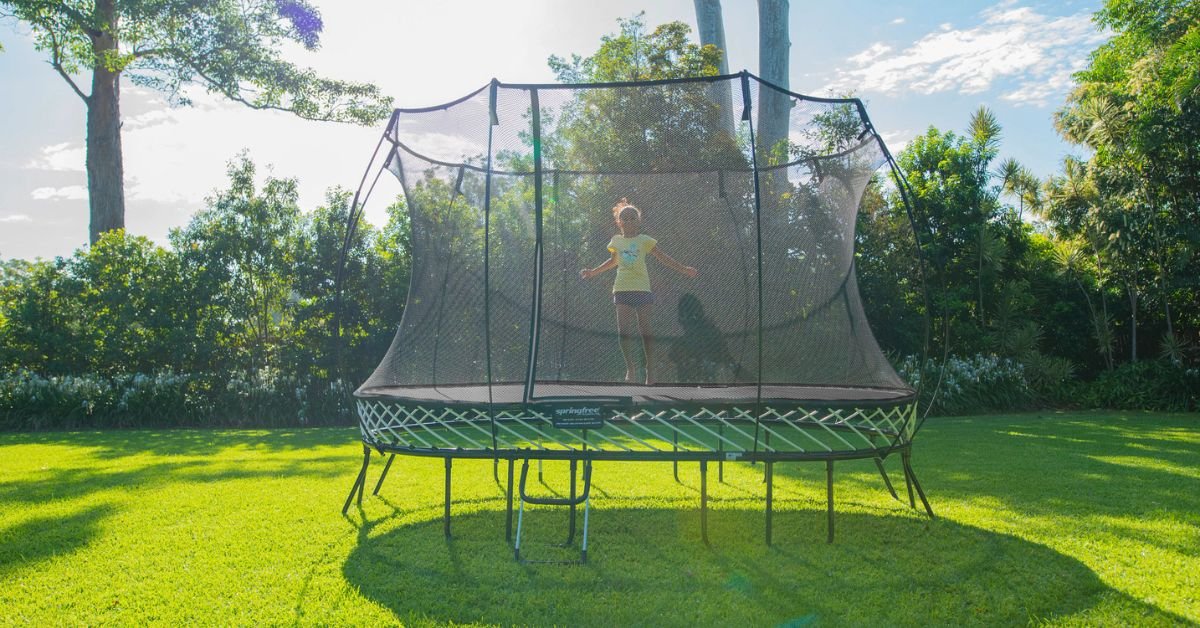
Springfree™ Trampolines eliminate many traditional maintenance concerns by removing dangerous springs and hard frame edges from the jumping surface. The innovative design uses flexible fiberglass rods that bend rather than break, creating a naturally safer jumping experience that requires less frequent safety inspections. If you’ve been considering ways to reduce maintenance and improve overall safety, making the switch to a springless trampoline can offer peace of mind and make upkeep easier.
Proper Storage Considerations
Seasonal storage extends your trampoline’s lifespan significantly. If you live in areas with severe winters, consider disassembling removable components. Always remove any remaining leaves or debris before storing covers, nets, and accessories in dry, enclosed locations.
Climate-specific maintenance schedules address regional challenges. Areas with heavy snow loads require different approaches than regions with intense sun exposure. Consult your manufacturer’s guidelines for location-specific recommendations.
Maintaining Your Family’s Fun Zone
Successfully protecting your backyard play equipment from birds and debris makes it that much easier to enjoy countless hours of safe family entertainment! Combining multiple deterrent methods creates the most effective defense system. Visual deterrents, sound devices, and physical barriers work together to create an environment that discourages unwanted visitors while maintaining your family’s access to outdoor fun.
Remember that consistency makes the biggest difference in your success. Regular maintenance, proper tool usage, and quality protective covers transform trampoline care from a chore into a simple routine. Keeping birds and leaves off of your trampoline becomes an effortless part of your backyard routine when you implement these proven strategies.
Your investment in quality play equipment deserves proper protection! Start with one or two methods that fit your budget and yard setup, then gradually expand your protection system as needed. Soon, you’ll enjoy a pristine jumping surface that’s ready for family fun whenever the mood strikes!